As the 8th annual Human Rights Festival wraps up at Constitution Hill (26–29 March), the spotlight returns to one of the most fundamental rights in South Africa’s Constitution — access to sufficient, safe water. Yet for millions of South Africans, this right remains uncertain, inconsistent, and, in many cases, out of reach.
South Africa is a naturally water-scarce country, receiving only about 464–497mm of rainfall annually — nearly half the global average. Learn more about SA’s water scarcity (World Resources Institute)
This limited supply is further strained by degradation of wetlands and water resources, siltation of dams, population growth, urbanisation, inefficient use, and changing lifestyles. In fact, nearly all available water resources are already allocated, leaving very little room to meet growing demand. National State of Water Report (Department of Water and Sanitation)
If current trends continue, South Africa could face a 17% gap between water supply and demand by 2030. Water supply gap projections (Digital Mall Blob Storage)
Communities on the Frontline
For many communities — especially in rural areas and informal settlements — water insecurity is a daily reality. While a majority of households have some form of access, reliability remains a major issue, with many still depending on inconsistent supply systems or unsafe sources. SA water access overview (Trade.gov)
The consequences go beyond inconvenience. Limited access to clean water impacts health, education, and local economic activity. It also disproportionately affects women and children, who often carry the burden of sourcing water for households.
The Overlooked Pressure: Farming Communities
Water insecurity doesn’t just affect households — it directly threatens South Africa’s farming communities and food systems.
Agriculture uses approximately 60% or more of the country’s available water, making it the single largest consumer. Agriculture and water use in SA (IOL)
For commercial and small-scale farmers alike, an unreliable water supply can lead to reduced crop yields, financial instability, and rising food prices nationwide. Irrigation systems depend heavily on consistent water access, yet prolonged droughts, erratic rainfall, and infrastructure failures are making this increasingly difficult.
In rural farming regions, groundwater is often the fallback, but over-extraction and poor management are placing additional pressure on already fragile systems. (Daily Maverick)
Simply put, when farming communities don’t have water, the ripple effects are felt on every dinner table in South Africa.
Beyond Policy: The Need for Immediate Action
Water security is not only about long-term policy — it is about immediate, practical solutions.
Large-scale infrastructure projects remain important, but they are often slow to implement. Communities facing urgent shortages cannot wait years for traditional concrete reservoirs or bulk systems to be completed.
What is needed is a dual approach:
- Long-term planning and governance reform, and
- Rapid, scalable infrastructure solutions that can be deployed quickly where they are needed most
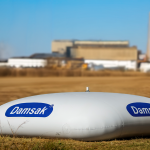
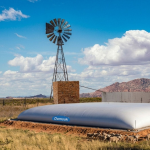
This includes modular storage, alternative reservoir systems, and durable, cost-effective technologies that can support both communities and agricultural operations.
A Shared Responsibility
At its core, water security is a human issue — one that underpins dignity, health, food security, and economic participation.
At Damsak, we believe our role extends beyond manufacturing. It is about enabling access — providing fast, reliable infrastructure solutions that help communities and farming regions respond to immediate needs while supporting long-term resilience.
The Human Rights Festival reminds us that rights are not theoretical — they must be realised in lived experience.
Water is not a privilege.
It is a right.
And in South Africa, it is a right that cannot wait.