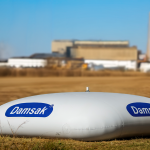
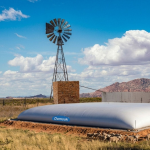
Water is the lifeblood of South African farms – farmers have always depended on their ability to store it to survive, but in a changing farming environment, traditional storage methods may no longer be the best answer. While the need to capture water is nothing new, the avenues for doing so have evolved. That’s why it is important to know that Damsak®’s modern technology has opened new ways to store your most precious resource more efficiently and safely than ever.
Let’s look at the seven most common water storage challenges farmers have to face.
One of the biggest issues is a silent thief – evaporation. In our hot, dry climate, traditional open-air earth dams and concrete reservoirs lose a staggering amount of water to the atmosphere every day. This means that much of the water you worked hard to collect is disappearing before you can even use it.
If you are using older dams, you might notice they are becoming shallower over time. This is due to siltation and sedimentation, where dust, silt and organic debris settle at the bottom. This makes your storage less efficient and often leads to the need for labour-intensive dredging to fix the original depth.
Maintaining the physical structure of your storage is another massive headache. Many older concrete dams develop cracks and leaks that are incredibly difficult to seal, while older steel tanks can succumb to corrosion. This is especially true if your water source has higher pollutant levels, which can shorten the lifespan of your metal units and irrigation equipment.
Beyond the structure itself, keeping the water clean is vital. Open storage is susceptible to contamination from dust, vermin, and algae growth. This is a major concern because producing contaminated crops or using dirty water in manufacturing can lead to serious liabilities under the Consumer Protection Act.
Energy reliability also plays a huge role in how you access your water. Many systems rely on electrical pumps, but with the ongoing strain on the national grid, a power outage can leave your stored water completely inaccessible. To combat this, many are moving toward gravity-fed systems and decentralised storage points to ensure the water flows even when the power does not.
Of course, the financial side cannot be ignored. Setting up high-capacity tanks or drilling boreholes is a capital-intensive investment, and the ongoing costs of checking for leaks and monitoring levels can be high. Without proper support, a single failure in a dam wall can be economically catastrophic.
Finally, we must consider our climate. Rainfall in recent years has often been intense but brief, leading to rapid runoff that is hard to capture. Coupled with the expectation of an El Niño summer this year, it is important to have ample reserve storage that can handle these massive, sudden inflows, while creating a buffer for the long dry spell that is forecast.
The road ahead requires a smart blend of modern technology and proactive management. By moving away from aging, open systems and embracing enclosed, protected storage, you are doing more than just saving water; you are building resilience for your farm. Considering flexible and inexpensive solutions such as Damsak® is the most effective way to ensure that whether you are growing crops, managing livestock, or running an industrial site, you have the security you need to thrive in the seasons to come.